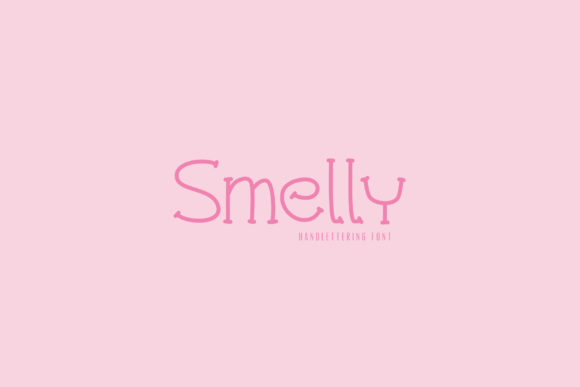
Smelly: A Sweet Handwritten Font for Creative Projects
There I was, staring at a blank brand board, trying to figure out how to bring a new café’s identity to life. The client wanted something warm, approachable, and a little bit quirky. After testing a few options, I stumbled upon Smelly—a sweet and friendly handwritten font that felt like it had been waiting just for this moment.
Smelly has a natural, organic feel that makes it stand out in a sea of stiff, overly polished typefaces. Its strokes are soft, with subtle variations that give it a handcrafted quality. It doesn’t scream for attention, but it definitely holds its own when placed on a logo or a menu board. The font feels like it was written by someone who cares about the design, which is exactly what the café needed.
One of the first things I did was test Smelly on a logo draft. I paired it with a simple sans serif for contrast, and it worked surprisingly well. The combination gave the brand a balanced look—modern yet personal. The handwritten font added a sense of warmth, while the clean sans serif kept things from feeling too chaotic.
I also tried Smelly on packaging mockups. Whether it was a coffee bag or a branded cup, the font brought a sense of authenticity. It looked great on both light and dark backgrounds, and the subtle flourishes made it feel more intentional. For a small business, that kind of detail can make a big difference in how customers perceive the brand.
As I moved into the branding phase, I used Smelly for everything from business cards to social media graphics. On a business card, it added a personal touch that made the contact information feel more inviting. In a social media post, it helped draw attention without being overwhelming. The font’s versatility made it easy to integrate into different design elements without losing its character.
One thing I noticed was how Smelly handled different sizes. At larger sizes, like in a website header or a poster, it maintained its charm and readability. At smaller sizes, such as on product labels or stickers, it still held up, though I found that using a slightly bolder weight helped keep it legible.
When working with clients, I always recommend testing a font before committing to it. Smelly is no exception. I suggest trying it in various contexts—on different backgrounds, with different colors, and in different sizes. This helps ensure that it works well across all the brand’s touchpoints.
Pairing Smelly with other fonts can enhance its impact. I’ve found that it pairs well with serif fonts for a classic look or with sans serifs for a more modern feel. It also works well with other handwritten fonts when you want to create a cohesive, handcrafted aesthetic. However, it’s important to use it sparingly, as it can easily become the star of the show.
Smelly is best used as a display or headline font. It shines in logos, headings, and short-form text where its personality can really come through. While it might not be ideal for long paragraphs, it can still work as an accent font in a larger typographic system. The key is to use it intentionally and with purpose.
Another thing to consider is the font’s file formats and licensing. Smelly comes in multiple weights and styles, which is great for flexibility. The inclusion of alternates and ligatures adds another layer of customization, allowing designers to fine-tune the look to fit their needs. It’s also important to check the licensing terms, especially if the font will be used in commercial projects.
For a creative studio or a small business owner, Smelly offers a unique way to express their brand’s personality. It’s not just a font—it’s a tool for storytelling. Whether it’s on a shop sign, a label sticker, or a homepage hero section, Smelly brings a sense of warmth and individuality that can set a brand apart.
Overall, Smelly is a valuable addition to any designer’s toolkit. Its friendly, handwritten style makes it perfect for a wide range of projects, from branding to packaging to digital design. It’s a font that feels right at home in both traditional and modern settings, and its natural appeal makes it a go-to choice for many creative professionals.
If you’re looking for a font that adds a personal touch to your designs, Smelly is definitely worth considering. It’s not just about the look—it’s about the feeling it evokes. And in a world where branding is all about connection, that’s something truly special.